Dry Gas Seal vs Wet Seal (API 692): Which Compressor Seal to Use
Every centrifugal or axial compressor needs a shaft seal to contain the process gas. The two mainstream choices are dry gas seals and traditional wet oil-film seals. API 692 — the industry standard for dry gas seals in petroleum and natural gas services — has made dry gas the default in nearly all new compressor installations, and the retrofit path for most existing ones.
What is a wet (oil-film) seal?
A wet seal uses circulating high-pressure oil to fill the clearance between a floating bushing and the compressor shaft. The oil pressure is kept slightly above the process gas pressure, so oil migrates inward, contacts the process gas, and is separated in a downstream drain trap.
Downsides:
- 5-30 gallons per day of oil contaminated with process gas — must be treated and disposed of.
- Complex oil supply system: pumps, filters, coolers, accumulators, drain traps.
- Downtime for oil-system faults; hydrocarbon contamination of downstream systems.
- Not compatible with dry or hazardous services that cannot tolerate any oil.
What is a dry gas seal?
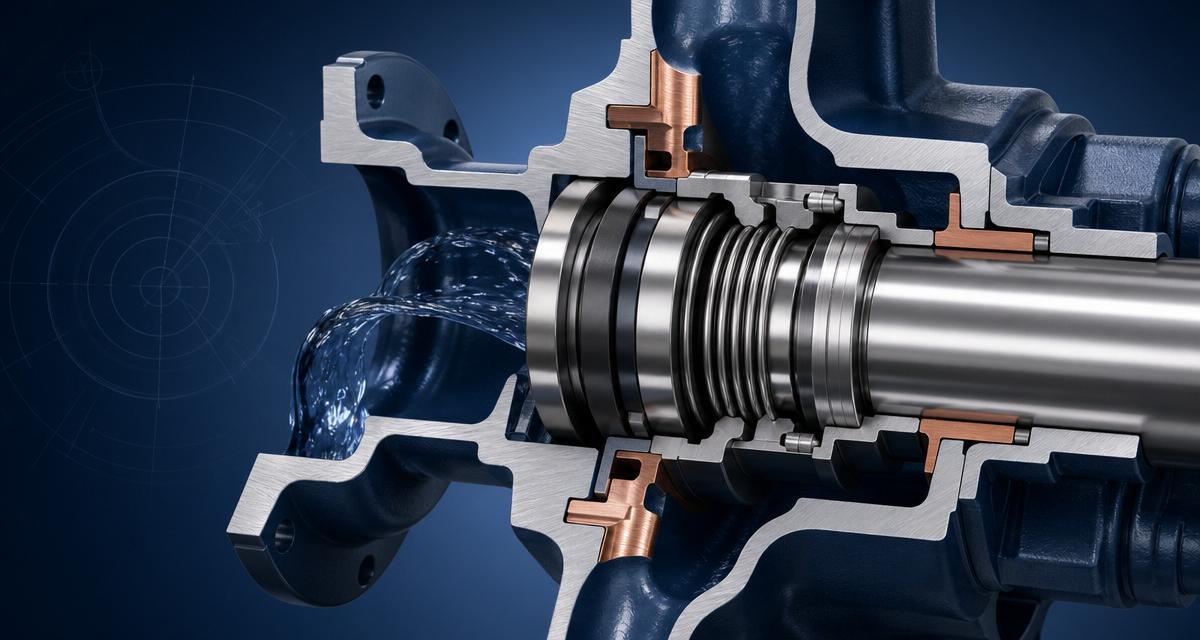
A dry gas seal is a non-contacting mechanical face seal. Micro-machined spiral grooves on the rotating face generate a self-pumping gas film 3-5 micrometres thick during rotation. The film keeps the faces separated, eliminating contact wear and reducing leakage to a few standard cubic feet per minute of clean process or barrier gas.
Astra manufactures tandem and double-opposed dry gas seals that meet API 692 for centrifugal and axial compressors.
API 692 in one paragraph
API 692 is the industry standard for dry gas seal systems on compressors handling toxic, flammable or hazardous gases. It defines the seal arrangement (tandem, tandem with intermediate labyrinth, or double opposed), the required gas conditioning panel (Plan 72/74/76), the venting scheme, and the instrumentation for pressure, temperature, flow and vibration monitoring. Compliance is a purchasing requirement in oil, gas and petrochemical projects worldwide.
Head-to-head comparison
| Attribute | Wet oil seal | Dry gas seal (API 692) |
|---|---|---|
| Leakage | Zero gas to atmosphere; oil contamination internal | 1-5 scfm barrier gas to vent |
| Support system | Oil pumps, coolers, drain traps | Gas panel with filters, regulators, instruments |
| Contact wear | Bushing wears; oil film separates | Non-contacting; no face wear at speed |
| Downtime | 24-72 h for seal or oil-system faults | 8-24 h for seal replacement |
| Emissions | Oil disposal issue; hydrocarbon inventory | Very low hydrocarbon slip |
| Capex | Lower seal cost, high system cost | Higher seal cost, moderate panel cost |
| Opex | Oil, filtration, disposal, labour | Filter cartridges, occasional cartridge exchange |
| Retrofit | Legacy standard | Well-established; drop-in kits available |
When wet seals still make sense
- Very old compressors where a full dry-gas retrofit is not economical.
- Services where process gas is unsuitable for a self-lubricated film (heavily contaminated, high liquid loading, sub-critical CO2).
- Applications with in-place, well-maintained oil systems that meet emission targets.
When to choose dry gas (API 692)
- Any new centrifugal or axial compressor project.
- Retrofits driven by emission reduction, hydrocarbon leak elimination or reliability.
- High-speed applications where oil film losses waste significant driver power.
- Services where the operator wants to eliminate an entire oil-system train.
Cross-reference and next steps
Astra dry gas seals cross-reference John Crane Type 28, EagleBurgmann DGS, Flowserve GaspacTM, Siemens, Elliott, MAN, Dresser-Rand and Solar Turbines. Every DGS ships with a matched conditioning panel and instrument package as required by API 692.
Learn more about mechanical seal types or request a technical quote with your compressor OEM, model and gas composition.
Related Articles
API Plan 32 vs Plan 53: Which Mechanical Seal Flush Plan to Use
Side-by-side comparison of API Plan 32 (external flush) and Plan 53 (pressurized barrier) for mechanical seals — costs, applications, piping, and when to choose each.
Engineering GuideHow Does a Mechanical Seal Work? Faces, Films & Forces
Step-by-step explanation of how a mechanical seal works — the sealing faces, fluid film, spring load and secondary seals that stop leakage in pumps and mixers.
Engineering GuideWhat is a Mechanical Seal? A Complete Guide
Learn what a mechanical seal is, how it works, the main types, and why it matters for pumps, mixers, compressors and other rotating equipment.
Explore Related Seal Categories
Browse the seal families most closely tied to this article:
Need a replacement mechanical seal?
Browse our catalog of high-performance replacement seals, or send us your equipment details and our engineers will recommend the right seal for your application.