What is a Mechanical Seal?
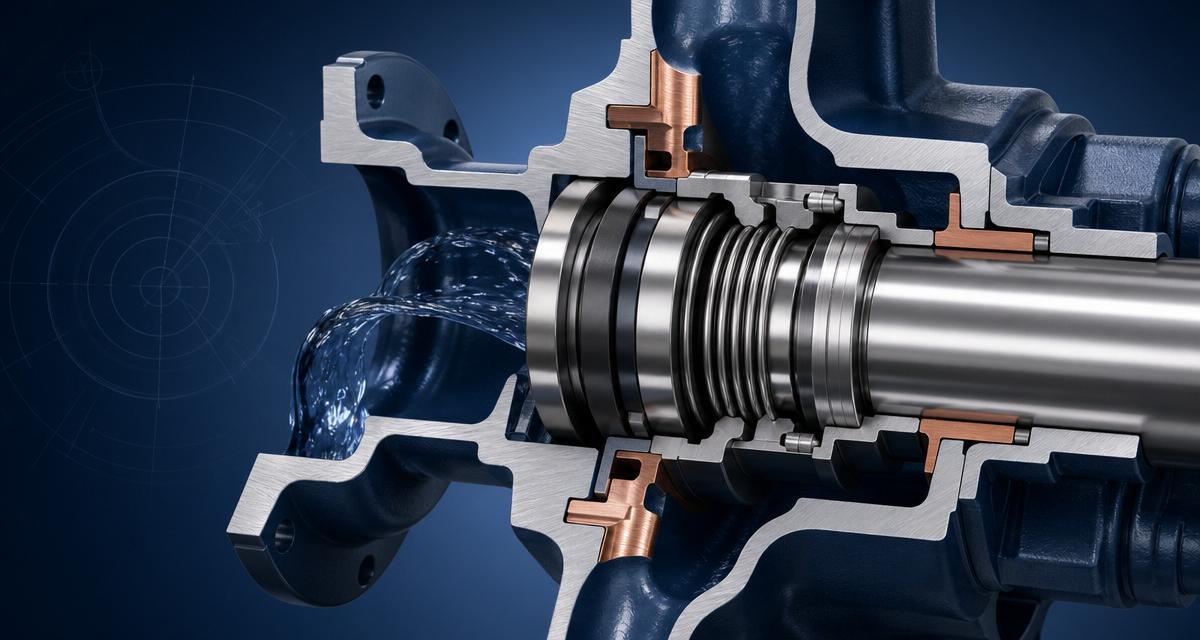
A mechanical seal is a device that joins a rotating shaft to a stationary pump, mixer, compressor or other piece of equipment while preventing fluid from leaking along the shaft. Unlike traditional packing, mechanical seals use precision-mated faces and secondary sealing elements to create a nearly leak-free barrier, even under high pressure, temperature and speed.
How Does a Mechanical Seal Work?
At the heart of every mechanical seal are two extremely flat faces: one rotates with the shaft and the other remains stationary in the housing. These faces are pressed together by a spring or bellows load, forming a thin fluid film between them. This film lubricates the faces and prevents direct metal-to-metal contact, while the extremely small gap stops most process fluid from escaping.
The five key components
- Rotating face — mounted on the shaft sleeve and turns with the equipment.
- Stationary face — seated in the gland or housing and remains fixed.
- Spring or bellows — provides the closing force that keeps the faces in contact.
- Secondary seals — O-rings, gaskets or bellows that seal between metal parts.
- Drive mechanism — transmits torque from the shaft to the rotating face without allowing leakage.
Why Are Mechanical Seals Important?
Leaking process fluid is costly, unsafe and environmentally damaging. Mechanical seals minimize emissions, reduce product loss, protect bearings from contamination and extend the service life of rotating equipment. In critical applications such as chemical processing, oil and gas, power generation and pharmaceutical manufacturing, a reliable seal is essential for continuous, safe operation.
Common Types of Mechanical Seals
- Spring pusher seals — versatile and widely used in general-purpose pumps.
- Elastomer Bellow Seals — flexible bellows absorbs shaft movement.
- Metal bellows seals — no dynamic O-rings, wide temperature range.
- Dry gas seals — non-contacting gas-film seals for centrifugal compressors.
- Mixer and agitator seals — engineered for long shafts and lateral movement.
For a deeper comparison, see our guide to mechanical seal types.
Get Expert Help with Your Next Seal
Understanding what a mechanical seal is and how it works is the first step toward longer equipment life and lower total cost of ownership. Whether you need a replacement seal for a standard pump or a custom engineered solution for severe service, Astra Mechanical Seals can help.
Related Articles
How Does a Mechanical Seal Work? Faces, Films & Forces
Step-by-step explanation of how a mechanical seal works — the sealing faces, fluid film, spring load and secondary seals that stop leakage in pumps and mixers.
Engineering GuideAPI Plan 32 vs Plan 53: Which Mechanical Seal Flush Plan to Use
Side-by-side comparison of API Plan 32 (external flush) and Plan 53 (pressurized barrier) for mechanical seals — costs, applications, piping, and when to choose each.
TroubleshootingMechanical Seal Failure Modes & Troubleshooting Guide
Diagnose mechanical seal failures fast: heat checking, blistering, chipped faces, dry-run damage, elastomer failure and installation errors — with fixes for each.
Explore Related Seal Categories
Browse the seal families most closely tied to this article:
Need a replacement mechanical seal?
Browse our catalog of high-performance replacement seals, or send us your equipment details and our engineers will recommend the right seal for your application.