Cartridge vs Component Mechanical Seals: Which Should You Use?
Both cartridge and component mechanical seals do the same job — seal a rotating shaft. The difference is how they are assembled and installed. That single distinction changes installation time, safety, repair cost and reliability enough to make it the first question you should answer when specifying a seal.
What is a component seal?
A component seal ships as a set of loose parts: rotating face, stationary face, springs, dynamic O-ring, gland plate and hardware. The installer measures the working length, sets the compression manually, and assembles everything inside the seal chamber.
Advantages:
- Lower unit cost — no sleeve, no factory pre-assembly.
- Smaller radial envelope — fits inside older stuffing boxes.
- Simple stocking — parts can be re-used across similar equipment.
Disadvantages:
- Installation is skill-dependent. Wrong spring compression is the number-one cause of premature failure.
- Longer downtime — measurement, setting and bench work take extra hours.
- Not safe on hazardous services — a component double seal must be disassembled to reset.
What is a cartridge seal?
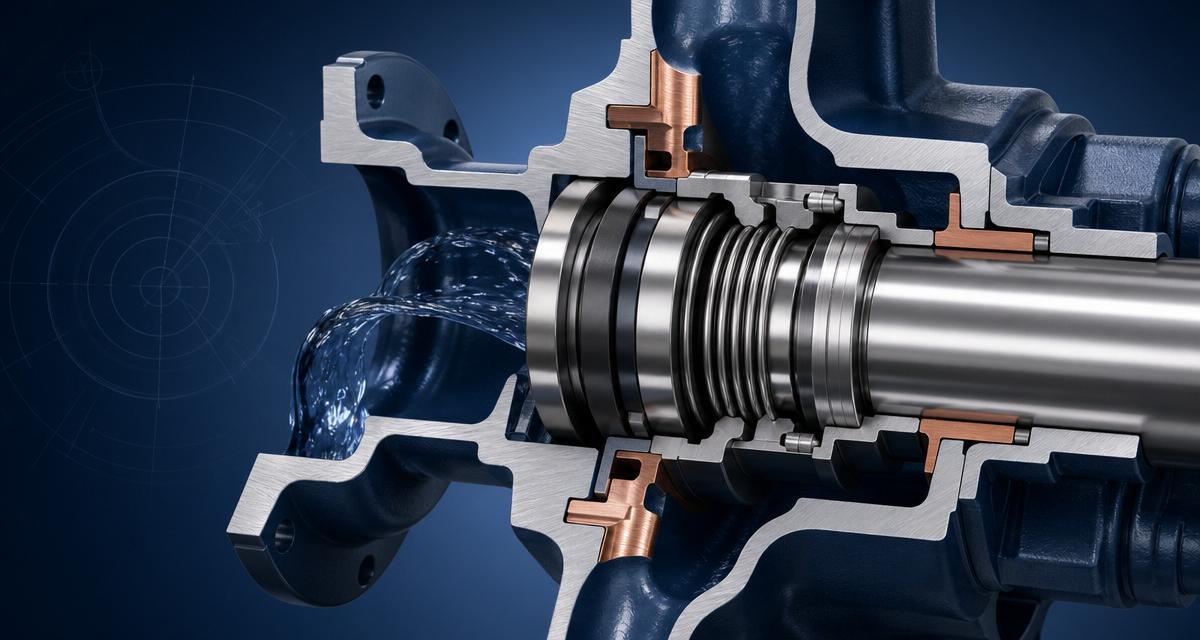
A cartridge seal is a self-contained unit on a shaft sleeve, complete with gland plate, springs, faces, and setting clips or plates that hold everything at the correct working length. Installation is: slide it on, bolt the gland, remove the clips.
Advantages:
- Fewer installation errors — the seal is set at the factory.
- Fast repair — often under an hour, compared with 3-4 hours for a component seal.
- Safer for double and tandem designs — no field assembly of barrier fluid chambers.
- Interchangeable across pump platforms with the right sleeve adapters.
Disadvantages:
- Higher unit price — the sleeve and gland add cost.
- Requires more radial space — some tight seal chambers cannot accept a cartridge.
Cost of ownership: cartridge usually wins
The unit price of a component seal is often 20-40% lower, but the total cost of a seal event includes:
- Installation labour (2-4 hours saved with cartridge)
- Rework cost when compression is set wrong (typical failure rate is 15-25% higher for field-set component seals)
- Lost production during the outage
For most industrial plants the cartridge total cost of ownership is lower after one avoided rework.
When to specify component
Choose a component seal when:
- The seal chamber is too tight for a cartridge sleeve.
- You are the OEM assembling pumps on a production line.
- You have a highly experienced maintenance crew and a benign service.
When to specify cartridge
Choose a cartridge seal when:
- Field installation is done by rotating maintenance crews.
- The process is hazardous, toxic or expensive to spill.
- You need a double or tandem arrangement (API Plan 52/53/54).
- Fast repair time matters more than lowest sticker price.
Astra supplies both types across every category in our catalog. Explore our spring pusher cartridges, metal bellow cartridges, and dual mixer cartridges, or contact us for a recommendation.
Related Articles
Mechanical Seal Types Explained: A 2026 Buyer’s Guide
Every major mechanical seal type explained — pusher, non-pusher, cartridge, component, single, double, dry gas and more. Includes selection guide and cross-references.
Buyer’s GuideElastomer Bellow Seals: When to Use Them (and When Not To)
Elastomer bellows seals replace springs and dynamic O-rings with a flexible rubber bellows. Learn when they win, their limits, and OEM cross-references.
Buyer’s GuideHow to Select a Mechanical Seal for a Slurry Pump (2026 Guide)
Step-by-step selection guide for slurry pump mechanical seals: face materials, flush plans, single vs double, and OEM cross-references for mining, FGD and dredging service.
Explore Related Seal Categories
Browse the seal families most closely tied to this article:
Need a replacement mechanical seal?
Browse our catalog of high-performance replacement seals, or send us your equipment details and our engineers will recommend the right seal for your application.